Macroeconomic Headwinds May Actually Be Tailwinds for UiPath

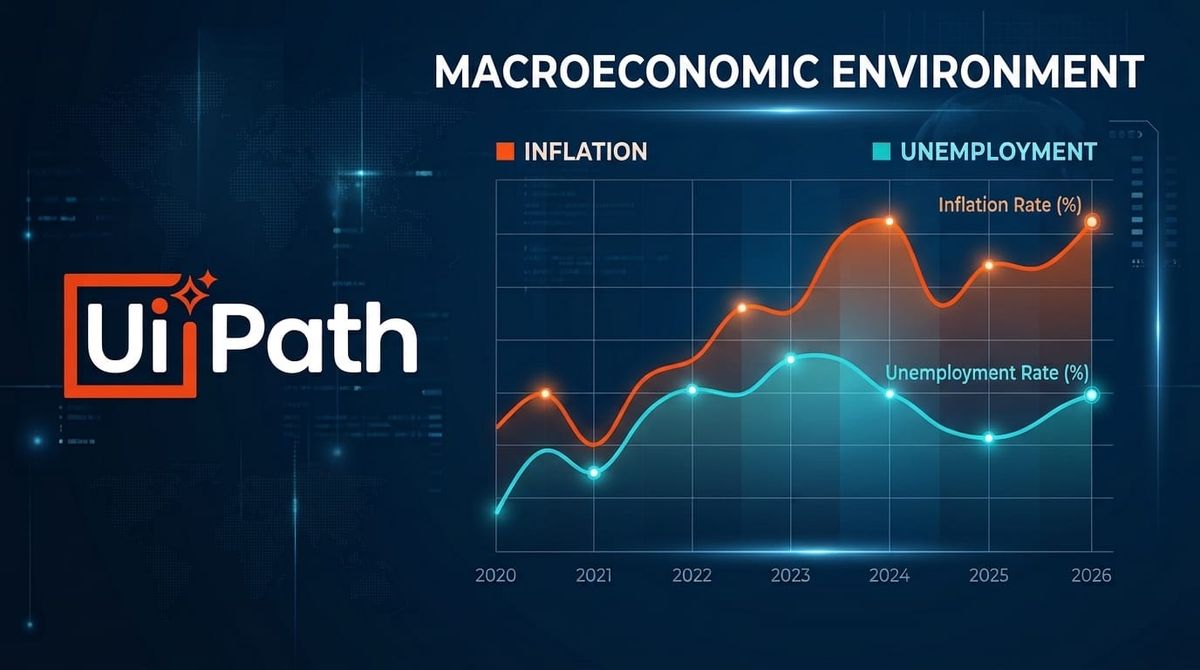
As a long-term investor, it is important to consider the overarching macroeconomic environment as it helps add context to the backdrop in which your long-term theses exist.
This article examines two key macroeconomic risks and outlines how UiPath is positioned to navigate—and, in some ways, benefit from—these broader macroeconomic headwinds.
Rather than attempting an exhaustive list of every hypothetical macroeconomic risk, this analysis focuses on two of the most immediate and defining macroeconomic headwinds today:
- Rising interest rates (short-term and long-term).
- Weakening consumer financial health.
Rising Interest Rates
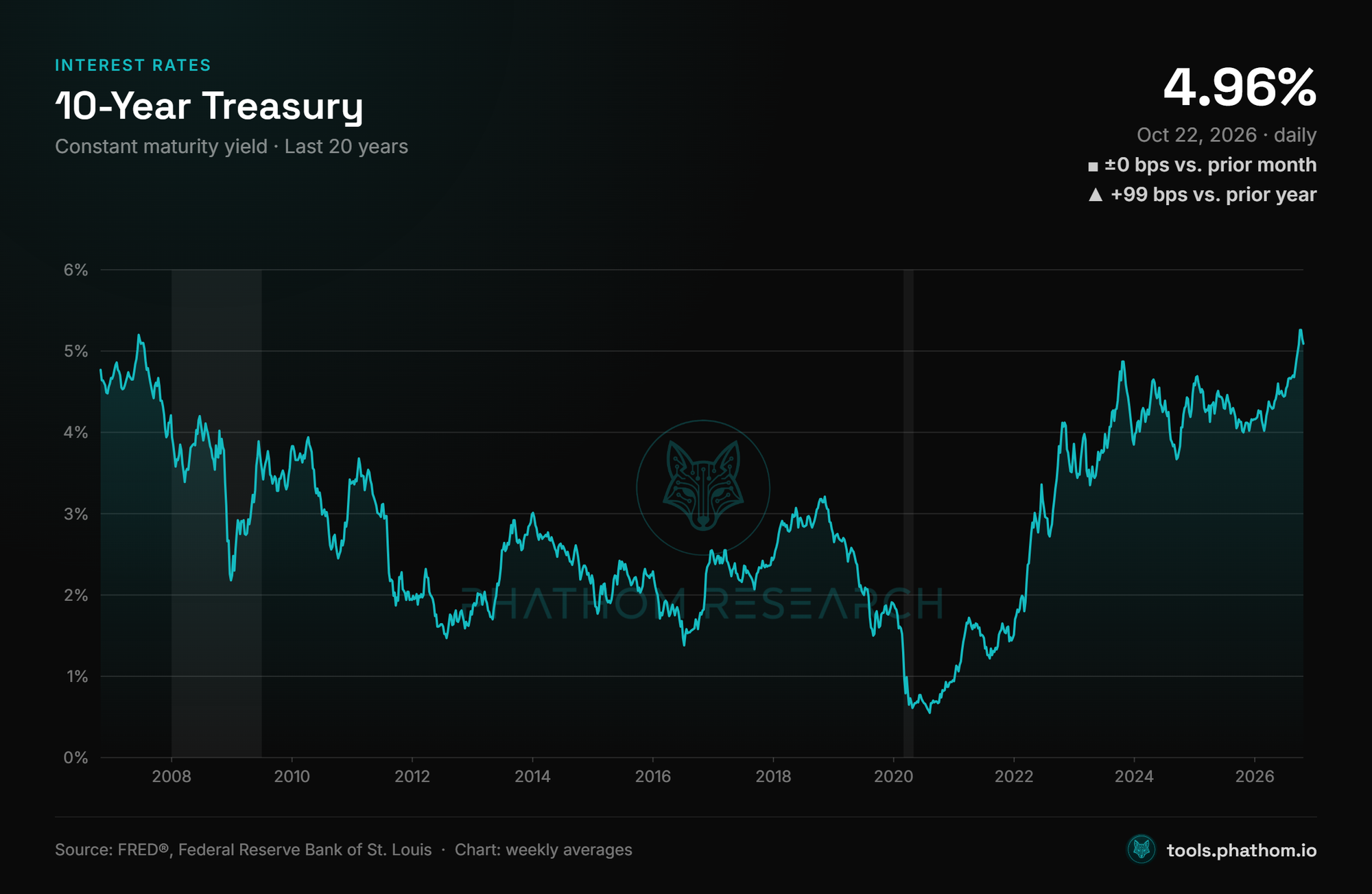
In September 2026, the Federal Reserve increased the interest rate for the first time in three years. While short-term rates only went up by 25 basis points, long-term interest rates have risen more substantially. As of October 22nd, 2026, the 10-year Treasury Yield is at 4.96%. This marks an increase of 99 basis points vs. prior year. Although the 10-year treasury rates have cooled about 30 basis points since early October, these levels are still near 20-year highs. If inflation does not cool down, the bond market is likely to continue to demand a higher yield.
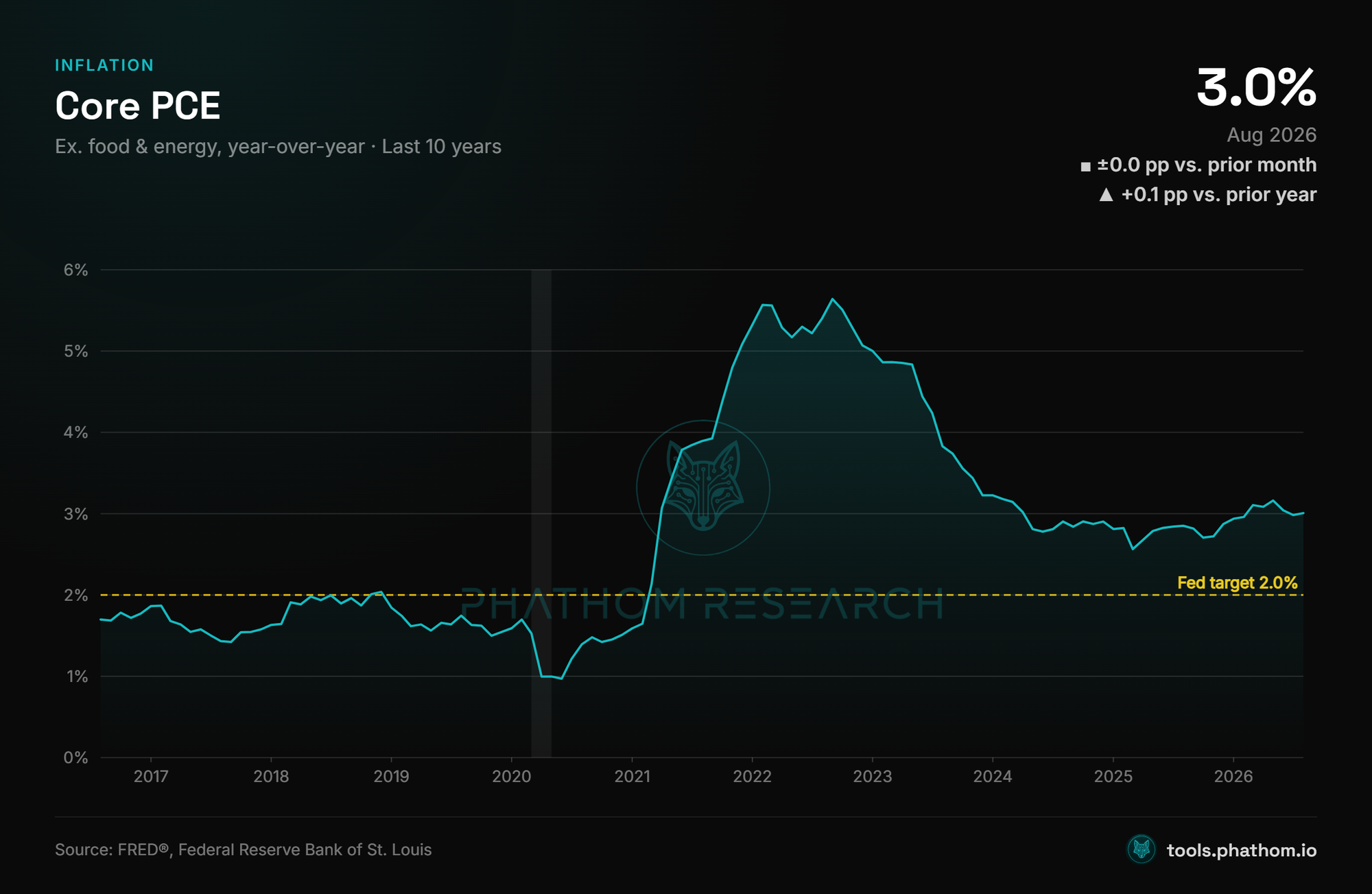
A primary reason for the Fed deciding to raise rates in September is that inflation has been stubbornly persistent. As seen in the chart below, Core Personal Consumption Expenditures (PCE) has remained well above the Fed's 2.0% target since 2021. While inflation did drop to 2.6% in March 2025, it has not touched 2.0% since 2021. As with any economic data, these are lagging indicators reflecting pricing changes that have already occurred. The the latest available data is through August 2026 where it remained at 3.0%. Although, Core PCE rate has not materially increased its momentum this year, there are signs pointing to possible acceleration, such as the Producer Price Index.
The war with Iran, which began in late February 2026, has put immense pressure on oil prices. As a result, higher fuel prices are driving up production and shipping costs. Conventional wisdom says that prolonged fuel price elevation should lead to higher prices of goods and services as retailers pass these costs onto consumers. We are already seeing this show up in the Producer Price Index (PPI) - the index that measures the changes in prices charged to wholesale producers of goods. This index has increased dramatically this year reaching the highest YoY percentage change since 2021. As seen in the chart below, the latest PPI change is sitting at 6.3% - up 3.3 percentage points vs. prior year.
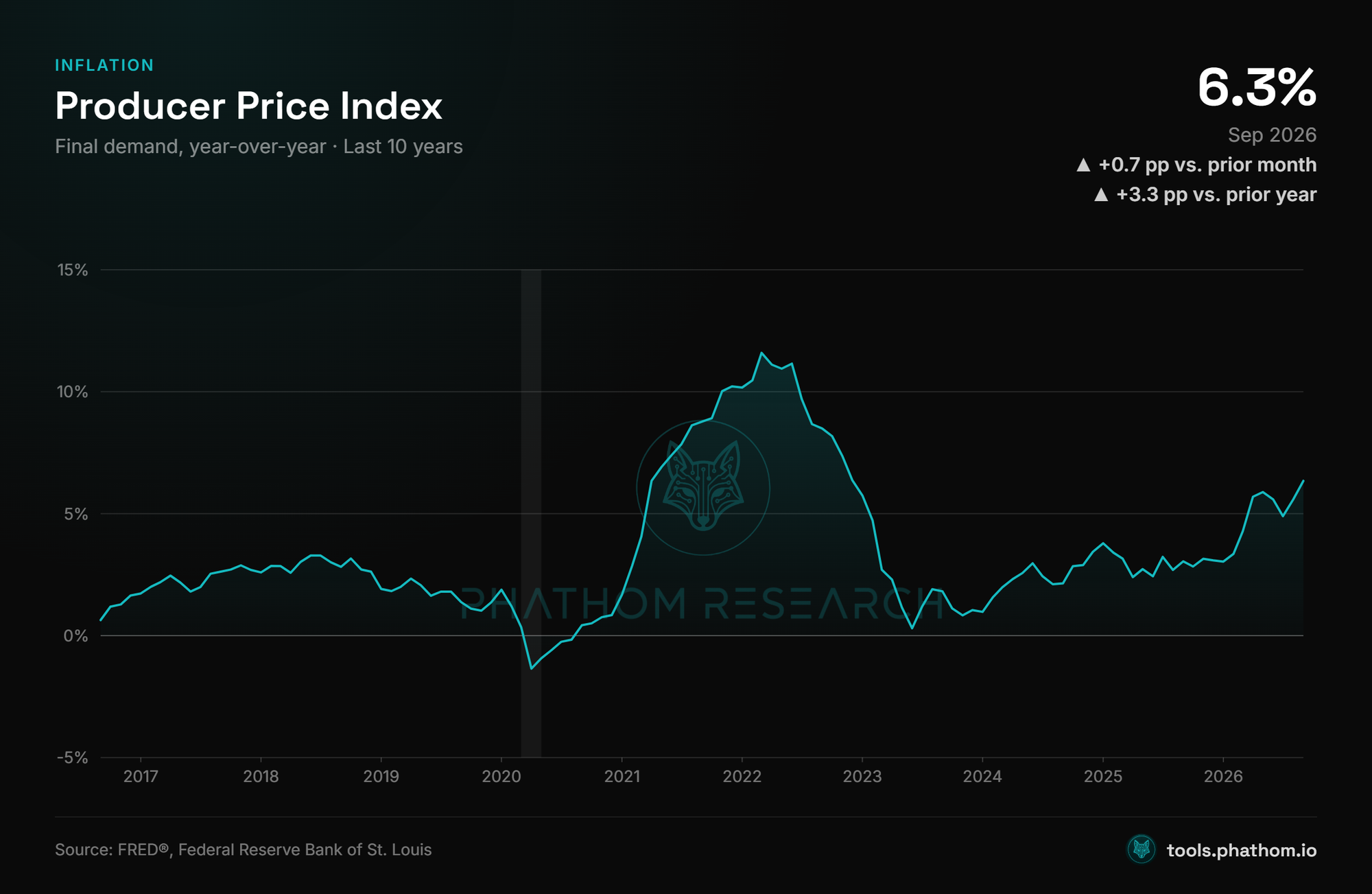
If inflation continues to remain elevated, or worse, if it picks up momentum, the Fed will be forced to continue raising short-term interest rates. Although the market is currently pricing in a low likelihood of an October rate hike, there is general market consensus that there will be another rate hike in December. The bond market is already pricing in higher long-term rates reflecting concerns about government spending, large-scale commercial borrowing tied to AI datacenter buildouts, and elevated oil prices stemming from the war with Iran. On top of these inflation concerns, the US consumer financial health also seems to be showing signs of weakness.
Weakening Consumer Financial Health
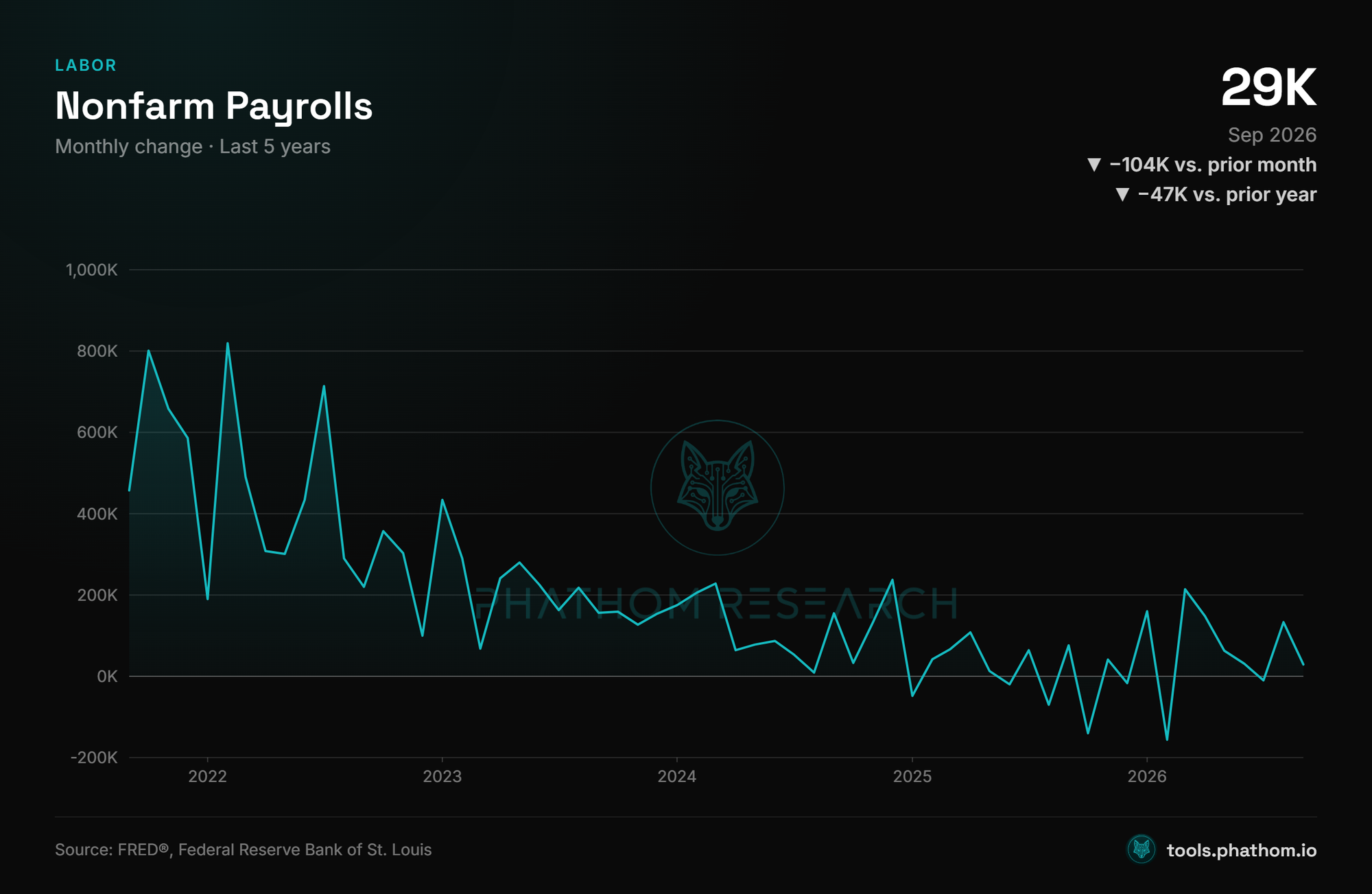
There seems to be stagnation occurring among key consumer financial health metrics. Although the headline unemployment rate remains relatively strong at ~4%, non-farm payrolls, which measures new job growth, tells a more pessimistic story of stagnation in the labor market. As seen in the chart below, nonfarm payrolls have drastically slowed down with 7 out of the last 21 months resulting in negative job growth. The concurrence of non-farm payrolls slowing down while the overall unemployment remains relatively strong signals what economists have deemed a "low hire, low fire" environment. Said differently, while new job growth has stagnated, people have been generally remaining in their jobs, keeping the unemployment rate relatively stable. Despite the unemployment rate remaining relatively resilient, the fact that new job creation has slowed down significantly leaves reasonable concern for the future of the labor market.
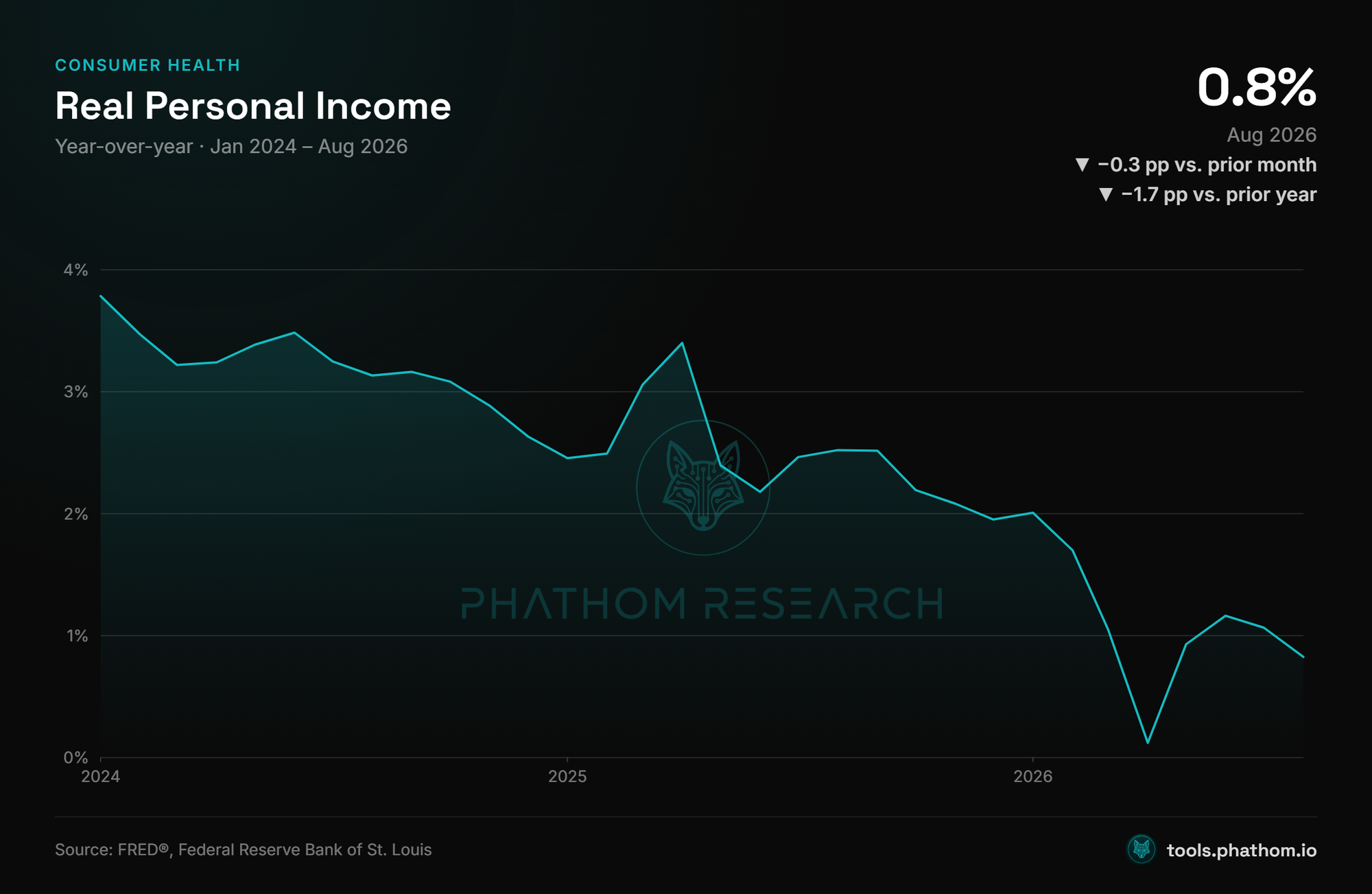
In addition to slowing new job growth, real personal income (RPI) has also stagnated over the past couple of years. RPI measures inflation-adjusts nominal income to measure how real wage growth stacks up against the rising cost of goods and services. A healthy level would be in the 2.5%-3.0% range; however, as seen in the chart below, the recent rates are well below that range. RPI growth has consistently dropped from January 2024 to August 2026 with the latest datapoint at 0.8% growth. This means that current wage growth is just barely keeping up with rising prices.
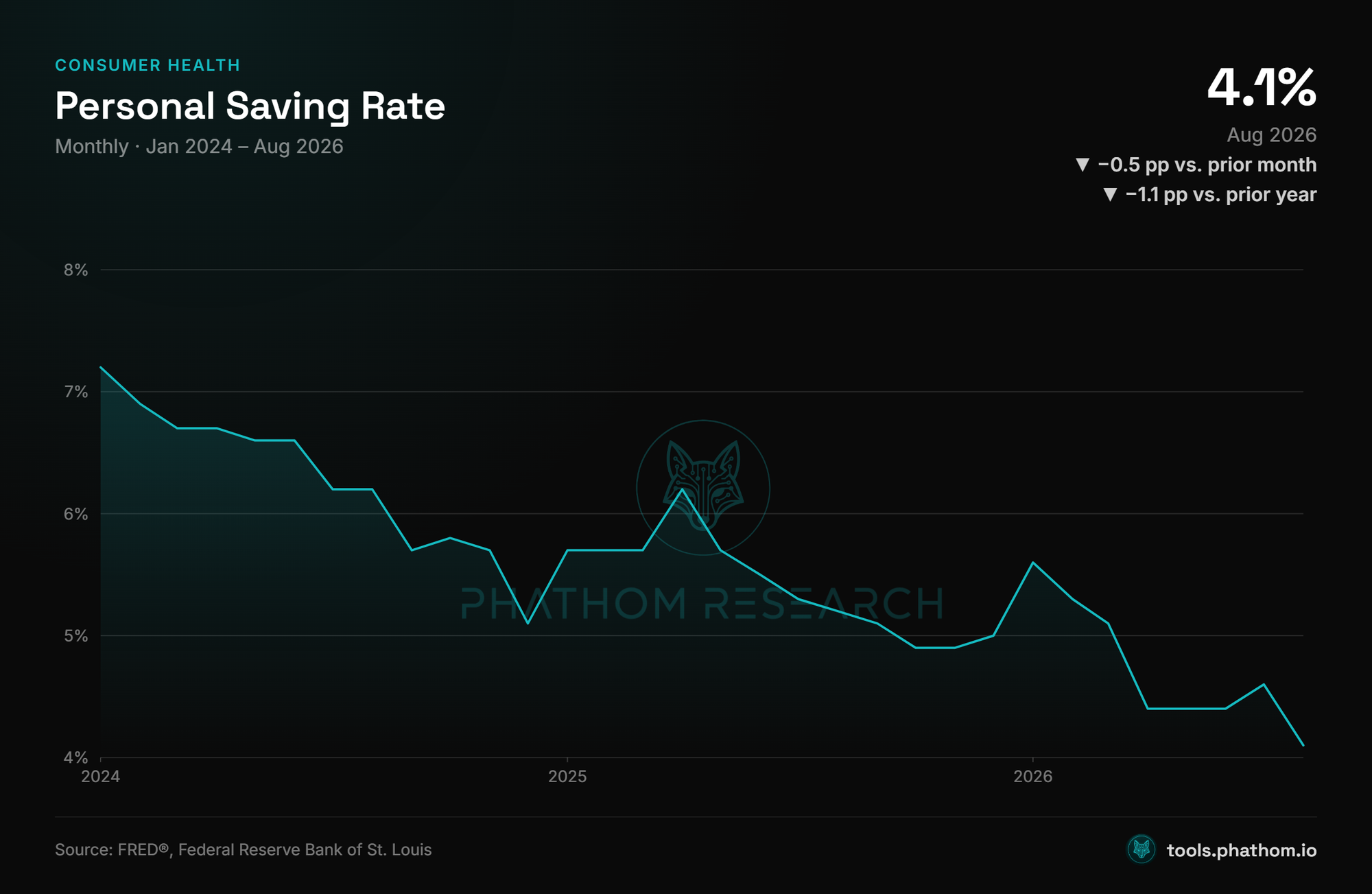
Almost in lockstep with the reduction in RPI, the personal savings rate across American households has also dropped considerably since January 2024. This means that there is less of a safety net available for consumers in the face of an economic downturn.
So far, we have covered key macroeconomic risks in a broad sense. In the next section, we will focus on how these risks specifically impact UiPath as an investment.
How These Macro Risks Impact UiPath
To assess how these macroeconomic risks impact UiPath (PATH) as an investment, let's ask three primary questions:
- How will these risks impact UiPath’s financials and balance sheet?
- How will these risks impact enterprise demand for UiPath’s platform?
- How will these risks impact the market’s valuation of the stock?
1. Financial Impact: A Zero-Debt Shield
Starting with direct business exposure, rising interest rates are primarily dangerous for companies carrying heavy debt burdens. UiPath carries zero long-term debt, meaning it has zero exposure to floating interest expenses or refinancing risk.
Supported by over $1B in cash and short-term investments since its 2021 IPO, UiPath’s operations are entirely self-funded via organic free cash flow. UiPath's business also requires very low levels of capital expenditure. While unprofitable businesses with high capital expenditures may face margin erosion from rising debt-service costs, UiPath’s balance sheet remains completely insulated.
If interested in a deeper dive into how UiPath was able to develop such a strong balance sheet, check out another article I wrote in June 2026 called UiPath's Balance Sheet and Free Cash Flow is a Force to be Reckoned With.
2. Enterprise Demand Impact: Turning Macro Squeeze into an Adoption Accelerant
A weaker economy may actually serve as an accelerant for enterprise adoption.
As borrowing costs rise, corporate profit margins get squeezed immediately for companies with floating-rate debt, and more gradually for companies with fixed-rate debt as it matures. Additionally, if the consumer continues to weaken, top-line growth at many companies will slow down. As a result, boardrooms and C-suites will be forced to shift their focus toward aggressive cost optimization as a means of offsetting these headwinds to improve net profit margins.
Because UiPath sells enterprise automation software designed to unlock measurable ROI, demand for its platform should benefit directly from these cost-reduction initiatives that ramp up during slower economic periods. UiPath customers will need to transition from AI posturing real-word AI savings as they face slower top-line growth. As an end-to-end agentic business orchestration platform, UiPath is very well positioned for this secular shift toward operational optimization during an economic slowdown.
3. Valuation & Stock Perception: Low Multiple Compression Risk
Broadly, rising 10-year and 30-year Treasury yields create competition for equities, raising the discount rate applied to future cash flows. As DCF models get updated with higher risk-free rates of return, high-beta, unprofitable tech stocks trading at elevated multiples bear the brunt of this multiple compression.
UiPath presents a very different profile. Trading at ~3.2x EV/Sales with strong free cash flow and a sticky enterprise base, the stock carries limited risk of severe multiple compression. Over the long term, top-line growth and operating margin expansion should comfortably outweigh broader market valuation headwinds.
For these reasons, I remain bullish UiPath as a long-term investment even in the face of a macroeconomic slowdown.
While rising interest rates and a weakening labor market may put pressure on the stock market as a whole, UiPath is well equipped to face these headwinds. Strong free cash flow and zero debt allows UiPath's expenses to be unaffected by rising interest rates. Rising borrowing costs and weakening consumer demand may actually drive more enterprise demand for UiPath's automation products as its customers look for ways to offset macro headwinds that pressures their bottom line.
Research Tool: If you found the macroeconomic charts included in this article useful and are interested in tracking upcoming macroeconomic release dates, check out this free tool: tools.phathom.io/macro.
Disclosure / Disclaimer: This article represents independent opinions and equity research of the author. It is provided for informational purposes only and does not constitute financial or investment advice. The author holds long positions in UiPath (NYSE:PATH) at the time of writing this article.